
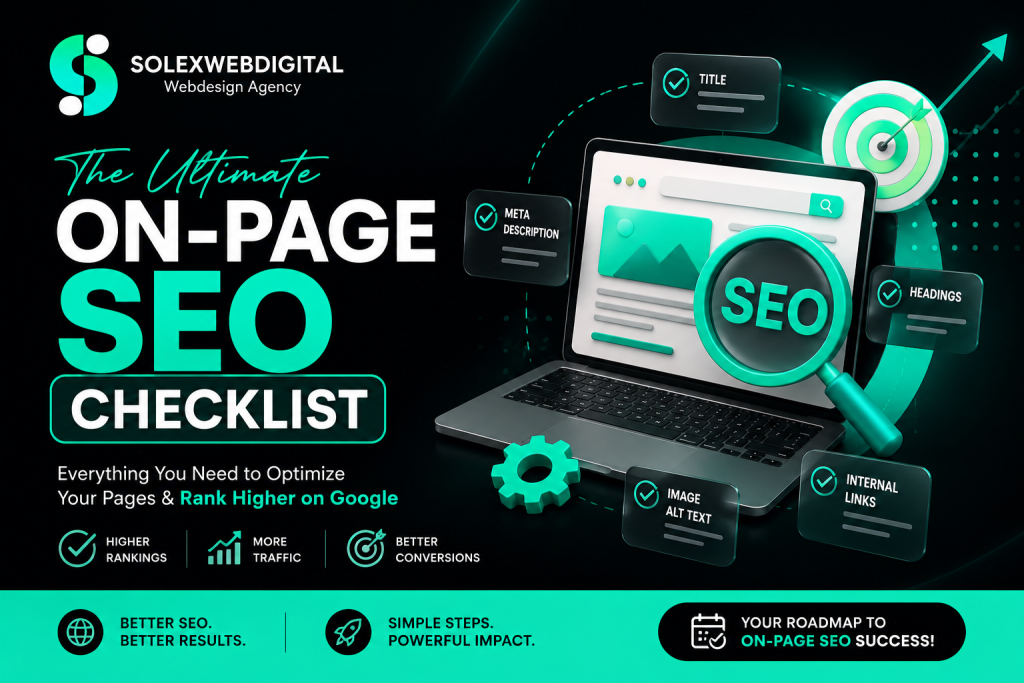
On-Page SEO Checklist for Higher Google Rankings
Introduction
On-page SEO checklist refers to the optimization techniques you apply directly to your website pages to help search engines understand your content and improve rankings. From writing optimized titles and headings to improving internal links and image optimization, every detail matters.
This checklist walks you through the essential on-page SEO tasks you should complete before publishing any page or blog post.
What You’ll Learn
- Title tags
- Meta descriptions
- Header tags
- URL optimization
- Internal linking
- Image SEO
- Keyword placement
- Content optimization
Related Resources
Follow us on https://www.pinterest.com/Solexwebdigital/
FAQ
What is an On-Page SEO Checklist?
An On-Page SEO Checklist is a list of best practices used to optimize individual webpages for search engines. It includes tasks such as optimizing title tags, meta descriptions, headings, URLs, images, internal links, and content to improve Google rankings.
Why is an On-Page SEO Checklist important?
Using an On-Page SEO Checklist helps ensure every page is fully optimized before publishing. It improves search engine visibility, enhances user experience, and increases the chances of ranking higher in Google search results.
How often should I use an On-Page SEO Checklist?
You should use an On-Page SEO Checklist every time you publish a new page or blog post. It’s also a good idea to review existing pages every few months to keep them updated with current SEO best practices.
What is the difference between on-page SEO and technical SEO?
On-page SEO focuses on optimizing the content and HTML elements of a webpage, such as headings, keywords, and internal links. Technical SEO focuses on the backend of your website, including site speed, crawlability, indexing, structured data, and mobile usability.
Does an On-Page SEO Checklist guarantee higher rankings?
An On-Page SEO Checklist improves your website’s SEO foundation, but rankings also depend on factors such as content quality, backlinks, website authority, user experience, and competition. Following SEO best practices gives your pages a stronger chance of performing well in search results.